The $200 Painting vs. the $3,000 Flight: Why Americans Are Swapping Vacations for Paradise Art
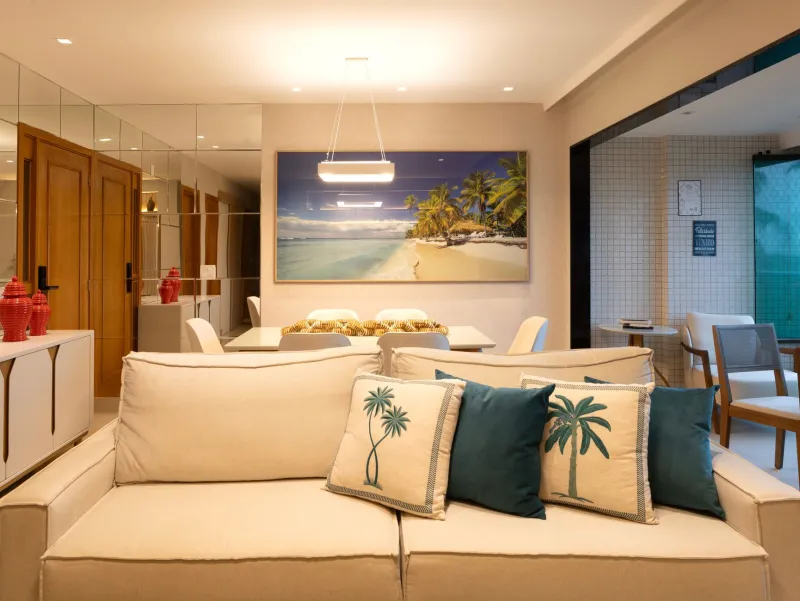
Let's be honest — the dream vacation is getting harder to pull off. Between airfare that seems to double every time you refresh the page, packed resort calendars, and the sheer mental load of planning a trip while already burned out, a lot of Americans are quietly asking themselves: is there another way?
Turns out, there might be. And it involves a paintbrush, a good frame, and a little strategic wall space.
Across the country, busy professionals are redirecting what would have been their travel budgets toward something more permanent: paradise-themed paintings. Tropical coastlines, sun-drenched beaches, lush jungle canopies — the kind of scenes that used to require a boarding pass are now showing up above home office desks and across bedroom walls. And the people doing it say it's not just a consolation prize. It's genuinely changing how they feel at home.
What's Actually Happening in Your Brain
This isn't wishful thinking. Behavioral psychologists have been studying the relationship between visual environments and emotional states for decades, and the findings are pretty compelling.
Dr. Erin Caldwell, a cognitive behavioral therapist based in Austin, Texas, explains it this way: "Our nervous systems don't always distinguish cleanly between a real environment and a vividly represented one. When you're surrounded by imagery associated with safety, warmth, and open space — like a beach horizon or a calm lagoon — your brain begins to lower its alert response. Cortisol drops. Breathing slows. It's not identical to being there, but it's not nothing, either."
This is sometimes called environmental cueing — basically, your brain picks up on visual signals and starts behaving accordingly. A cluttered, gray office signals stress and urgency. A wall-sized painting of turquoise water and swaying palms signals something very different.
For people who work from home (and that's still a huge chunk of the American workforce), this matters enormously. You can't exactly pop out to a beach between Zoom calls. But you can design your immediate environment to feel a little less like a pressure cooker.
The Interior Design Angle: Placement Is Everything
Buying a tropical painting and randomly hanging it somewhere isn't quite the same as intentionally designing a space around it. Interior designers who specialize in wellness-focused homes say the difference is significant.
Marcela Torres, an interior designer in Miami who works primarily with remote professionals, has built a small specialty around what she calls "destination rooms" — spaces designed to feel like an escape without requiring a passport.
"The biggest mistake people make is treating art like an afterthought," she says. "They paint the walls, buy the furniture, and then think about what goes on the walls last. But if the goal is a genuine psychological shift, the painting should be the anchor. Everything else builds around it."
Her approach involves a few key principles:
Line of sight matters most. The painting should be visible from wherever you spend the most time in the room. For home offices, that usually means directly across from the desk. For bedrooms, it's the wall you face when you first wake up. "You want that image to be one of the first things your eyes land on," Torres says. "Morning and evening are when you're most emotionally receptive."
Scale creates immersion. A small painting on a big wall doesn't do much. Torres recommends pieces that occupy at least 60 to 70 percent of the wall width in the primary viewing area. "Go bigger than feels comfortable," she advises. "That's usually the right size."
Lighting is the secret weapon. A warm-toned picture light positioned above a coastal painting can mimic the feel of afternoon sun hitting water. Combined with the right piece, it shifts the entire energy of a room.
The Numbers Don't Lie
Let's talk dollars, because that's a big part of why this trend is taking off.
The average American vacation costs somewhere between $1,800 and $4,500 per person, depending on destination, length, and travel style. Add in a travel companion or a family, and you're looking at real money — money that evaporates in about a week, leaving behind some photos and maybe a souvenir magnet.
A quality original paradise painting from an independent artist? Depending on size and medium, you're often looking at $150 to $800. Commission a larger custom piece and you might spend $1,200 to $2,000. Either way, you own it permanently. It doesn't require rebooking. It doesn't get canceled due to weather. And it works on you every single day.
"I used to spend around $4,000 a year on one big trip," says Derek Huang, a software engineer in Seattle who started collecting tropical art during the pandemic. "Now I've got three paintings in my apartment — a coral reef piece, a sunset beach scene, and this incredible Hawaiian coastline — and I spent maybe $900 total. My apartment feels completely different. I actually look forward to being home."
That's not a knock on travel. Vacations are wonderful and irreplaceable in their own right. But as a daily stress management tool, art has a cost-per-use advantage that's hard to argue with.
What to Look for When You're Buying
If you're ready to invest in your own slice of paradise, a few things are worth keeping in mind.
First, choose imagery that resonates personally. Generic "tropical" art doesn't carry the same psychological weight as a scene that genuinely moves you. Do you feel more at peace near the ocean? In a jungle? Watching a sunset over flat water? That specificity matters.
Second, consider the color temperature. Warm-toned paintings — think golden light, amber sand, warm coral — tend to feel cozy and grounding. Cool-toned pieces with blues and aquamarines feel more calming and expansive. Neither is wrong, but they serve different emotional needs.
Third, support independent artists when you can. Platforms like this one exist because there's a whole community of painters creating exactly this kind of work — and buying directly from them means you get something genuinely unique, not a mass-produced print that a thousand other people have in their living rooms.
Your Walls Are Working on You Whether You Realize It or Not
Here's the thing about your home environment: it's never neutral. The colors, the images, the textures around you are constantly sending signals to your nervous system. Most people just never think about it intentionally.
Choosing to hang a paradise painting in your home office or bedroom is a small act with a surprisingly outsized impact. It's a daily reminder that beauty exists, that calm is possible, and that escape — even a visual one — is always within reach.
You don't need a boarding pass for that. You just need the right piece of art on the right wall.
And maybe a little inspiration to get started. Lucky for you, that's exactly what we're here for.