Sound and Color: How Paradise Painters Are Turning Their Studios Into Full Sensory Escapes
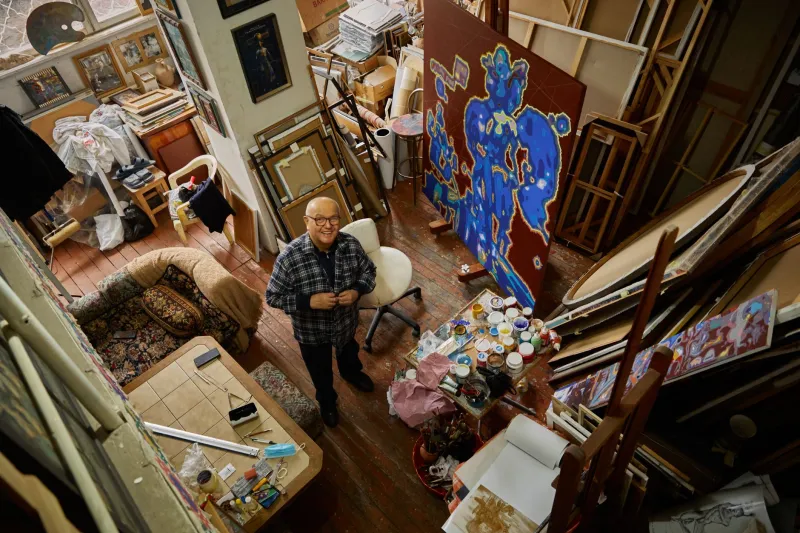
Close your eyes for a second. Imagine the sound of slow ocean waves, the distant echo of steel drums, and the low hum of wind moving through palm fronds. Now imagine picking up a brush.
Feel different? That's not your imagination. There's real science behind why the right soundtrack can change the way you paint — and a growing community of artists across the U.S. is leaning into it hard.
From collaborative live events in Brooklyn lofts to curated Spotify playlists shared inside online painting communities, the overlap between music and paradise-themed visual art is becoming one of the most exciting creative conversations happening right now.
Why Your Brain Wants Both at Once
The connection between sound and visual creativity isn't new — artists have been painting to music for as long as recorded music has existed. But the intentionality behind that pairing is evolving.
Researchers studying synesthesia — the neurological phenomenon where stimulation of one sense triggers an involuntary response in another — have found that even people without clinical synesthesia experience measurable cross-sensory associations. Warm colors get linked to higher-pitched sounds. Deep blues and greens tend to pair with slower, lower tones. Tropical imagery, with its layered complexity of turquoise, coral, and gold, has its own sonic fingerprint in the brain.
What this means practically: the music playing in your studio isn't just background noise. It's actively shaping your color choices, your brushstroke rhythm, and the emotional register of the work you're making.
"I noticed I painted completely differently when I had ambient island music on versus something with a harder beat," says Jenna Morales, a San Diego-based painter who creates large-format tropical canvases. "The slow stuff made me linger on gradients longer. I'd build up these really lush, layered skies I wouldn't have had the patience for otherwise."
The Collaborations Bringing This to Life
Some artists aren't just curating playlists — they're building full creative partnerships with musicians.
In New Orleans, painter Darius Cole and ambient electronic musician Theo Brant have been running quarterly "Painted Sound" sessions for the past two years. Attendees paint paradise-themed pieces while Brant performs live, improvising his soundscapes in real time based on what he sees happening on the canvases around him.
"It's genuinely responsive," Cole explains. "If the room is painting something heavy and stormy, Theo picks up on that energy and shifts the music. It creates this feedback loop between the sound and the art that you can't replicate with a playlist."
The events, held in a repurposed warehouse space, sell out within hours of announcement. They've since added a virtual version — participants paint at home while Brant streams live — which has drawn attendees from over thirty states.
On the West Coast, Hawaiian-born musician Leilani Kahale has partnered with several visual artists to release what she calls "companion albums" — original music composed specifically to be played while painting scenes of the Pacific. Each track corresponds to a different time of day or weather condition, from early morning reef light to a late-afternoon storm rolling in off the water.
"I wanted the music to do what a good reference photo does — put you there," Kahale says. "But sound can access emotion faster than an image sometimes. I wanted painters to feel the ocean before they painted it."
Building Your Own Immersive Painting Session
You don't need a live musician or a warehouse event to tap into this. Here's how to build a genuinely immersive painting environment at home.
Start with intention, not shuffle. Random playlists interrupt flow. Before you start painting, decide what mood or place you're trying to capture, then build or find a playlist that matches that specific energy. Painting a breezy Caribbean afternoon? Look for reggae, bossa nova, or light steel pan instrumentals. Working on a moody Pacific Northwest coastline with tropical undertones? Try slower ambient or post-rock without lyrics.
Match tempo to technique. Fast-paced music tends to loosen brushwork and encourage bolder marks — great for underpainting or blocking in large areas. Slower music supports detail work and blending. Try switching playlists mid-session as you move from broad strokes to fine detail.
Use field recordings. Platforms like YouTube, Spotify, and the app Noisli have extensive libraries of actual environmental sounds — real ocean waves, rainforest ambience, tropical birdsong. These aren't music exactly, but they're incredibly effective at triggering the kind of mental transportation that loosens creative inhibition. Many painters find that layering a soft musical track under a field recording hits differently than either alone.
Try a "listening session" before you paint. Give yourself five to ten minutes of just sitting with your reference image and your chosen soundtrack before you touch the canvas. Let the sound and the visual merge in your head. Several artists we spoke to swear by this as a way to arrive at the canvas already emotionally connected to the piece.
Experiment with silence for contrast. Some painters find that alternating between music and complete silence during a session creates interesting shifts in their work — almost like the painting has chapters. Worth trying at least once.
The Viewer Experience Is Changing Too
This multi-sensory approach isn't staying in the studio. Galleries and pop-up art shows are increasingly pairing paintings with curated audio experiences — QR codes next to pieces that link to a composer's companion track, headphone stations where viewers can "listen" to a painting, and fully soundscaped gallery environments.
At a recent pop-up in Austin featuring tropical and coastal painters, every piece in the show had an associated sound file chosen by the artist. Visitors used their phones to scan and listen while they looked. Attendance was up, dwell time per piece doubled compared to a traditional show format, and social sharing spiked — people were posting videos of themselves experiencing the art, not just photos of the paintings.
"It changed how people talked about the work," said the show's organizer. "They weren't just saying 'I love the colors.' They were saying 'this one made me feel like I was actually there.'"
That's the whole point, isn't it? Paradise isn't just a visual destination. It's a full-body feeling.
And it turns out, sometimes all it takes to get there is the right song.